API Partner Onboarding
Restructured onboarding into a progressive, persistent workflow that reduced manual coordination and enabled partners to reach integration readiness faster while preserving technical accuracy.
Internal and 3rd Party API Partner Platform
Enterprise B2B
Situation
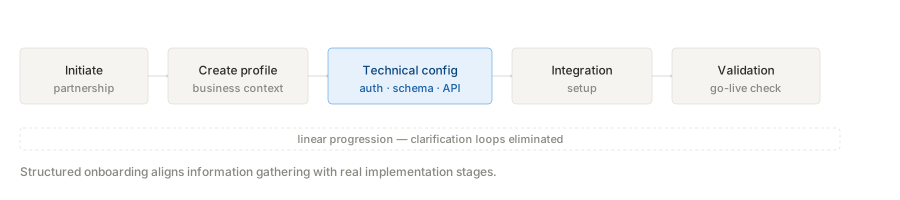
The Open Banking platform relied on a legacy onboarding process that had evolved organically across multiple teams. Requirements were captured through static wiki pages and long intake documents that lacked structure, persistence, and workflow logic.
Partners were presented with more than 50 technical questions upfront, many of which were not immediately relevant to initiating a partnership. Because responses were not stored in a structured system, Product Managers acted as intermediaries — manually collecting answers, re-entering data, and coordinating clarification across engineering teams.
Onboarding frequently took close to 90 days. Integrations were delayed, operational workload increased, and partners described onboarding as one of the most difficult parts of working with the platform. What began as documentation debt had become a barrier to platform adoption and a source of operational risk.
Task
As the product designer embedded with the API platform team, I was responsible for transforming onboarding into a scalable, structured system that could support both business stakeholders and technical implementation teams.
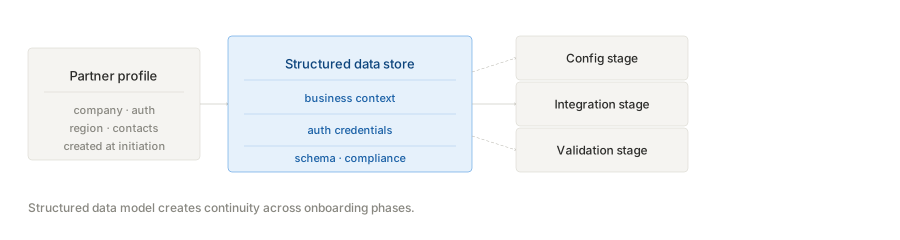
The solution needed to reduce early friction while preserving technical rigor. It also needed to create continuity across onboarding phases so information could be gathered progressively without creating gaps in compliance or engineering requirements.
Action
I began by mapping the end-to-end onboarding workflow across Product, Engineering, and Partner teams. Interviews revealed that the primary users initiating onboarding were Business Managers responsible for partnerships, not engineers. Over time, engineering requirements had accumulated without prioritization or sequencing, creating unnecessary cognitive load at the start of the process.
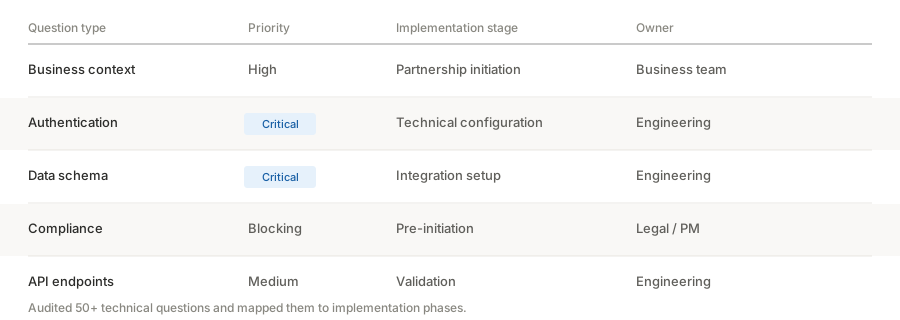
Working with Product and Engineering leadership, I audited the full set of technical questions and categorized them by implementation phase. This enabled a progressive disclosure model that preserved data integrity while reducing initial friction.
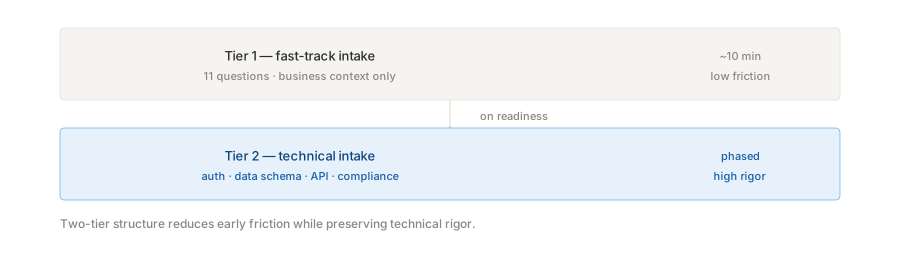
I designed a two-tier onboarding structure.
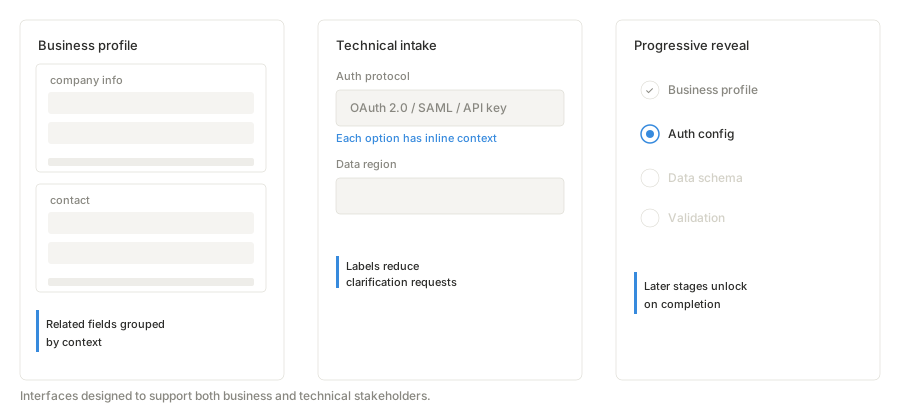
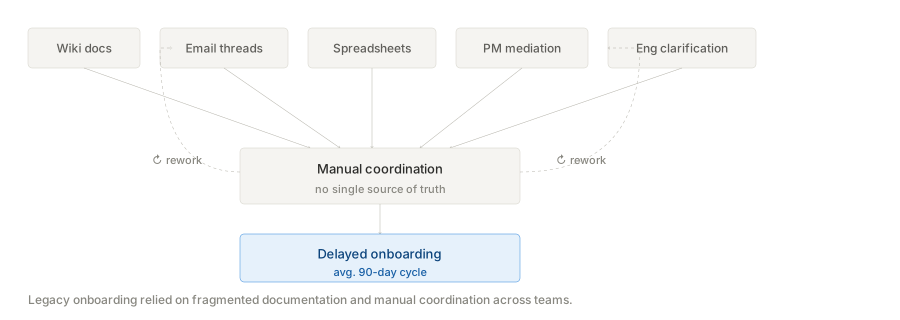
Tier 1 established a partnership profile through a fast-track intake of 11 essential questions. This enabled teams to initiate partnerships quickly while capturing key business context.
Tier 2 introduced a persistent technical intake aligned with real implementation stages. Teams could progressively provide authentication details, compliance requirements, data schemas, and configuration settings as integration progressed.
Throughout the process, I collaborated closely with platform engineers to ensure technical fidelity while abstracting unnecessary implementation complexity from business-facing users.
High-fidelity prototypes were validated with Product Managers to test comprehension, completion time, and workflow clarity. The final structure was documented as a durable source of truth to prevent regression into fragmented manual processes.
Result
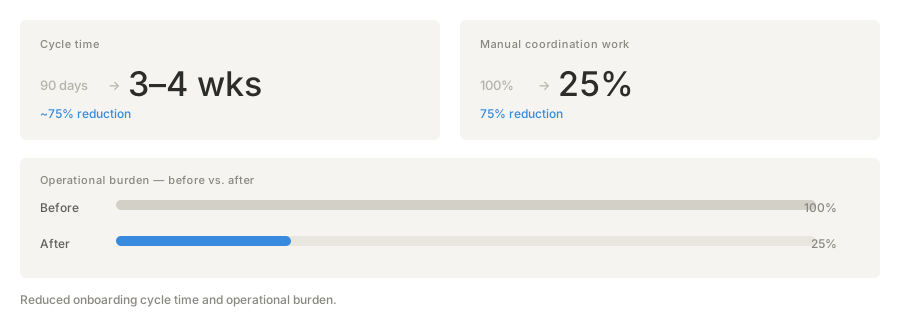
The redesigned onboarding system reduced estimated cycle time from roughly 90 days to approximately 3–4 weeks.
Product Managers saw an estimated 65–75 percent reduction in manual coordination and data re-entry. Partners were able to initiate integrations faster with clearer expectations, while engineering teams received more structured and complete technical information.
Most importantly, the platform gained a scalable onboarding foundation that could evolve without reintroducing fragmented intake patterns.