Performance Intelligence Dashboards
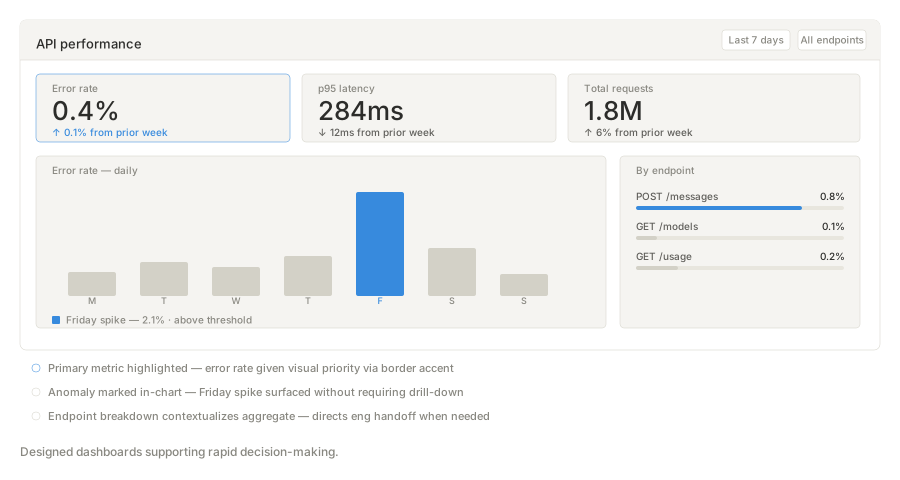
Translated backend telemetry into decision-ready dashboards that enabled product managers to independently monitor API health, improving visibility into adoption, reliability, and performance trends.
Internal Dashboard for Product Owners
Enterprise B2B
Situation
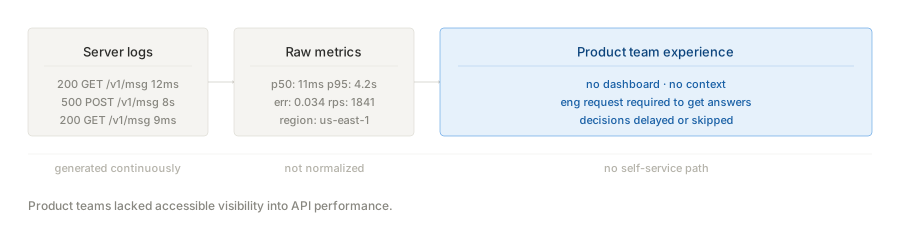
API Product Managers were responsible for monitoring the health, reliability, and growth of platform APIs, but had no direct way to observe system performance without engineering support.
To answer basic questions about usage patterns, error rates, or seasonal fluctuations, Product Managers relied on backend engineers to manually extract server logs. These exports were delivered as dense, unstructured datasets requiring technical interpretation.
Even simple questions could take days to answer. This dependency created operational friction and limited the ability of Product Managers to proactively identify risks or opportunities.
Data existed, but it was not accessible in a form aligned with product decision-making.
Task
As the sole designer embedded with API Product Managers and backend engineering, my goal was to translate raw technical telemetry into usable, decision-oriented insights.
The solution needed to provide real-time visibility into API performance while maintaining technical accuracy and avoiding additional reporting burden for engineering teams.
It also needed to scale alongside the platform without creating new maintenance overhead.
Action
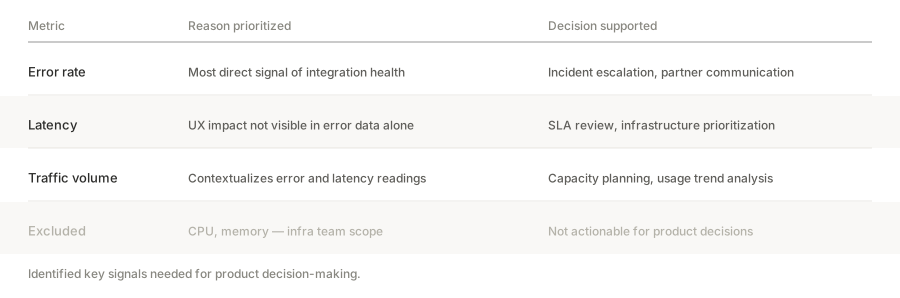
I conducted interviews with Product Managers to understand how performance data informed roadmap decisions and operational priorities. A clear pattern emerged: while logs contained extensive detail, only a small subset of signals consistently influenced product decisions.
Working closely with engineering, I mapped backend telemetry structures to decision-relevant metrics such as request volume, error frequency, and trend stability over time.
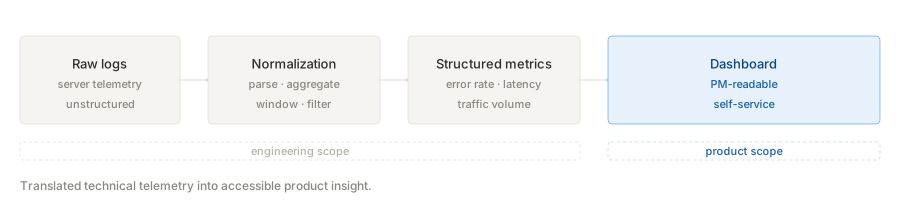
Rather than exposing raw technical logs, I designed a translation layer that organized system signals into structured visual models aligned with product reasoning.
I led end-to-end design of a self-service dashboard that surfaced time-based views across daily, weekly, monthly, and quarterly intervals. Hit volume and error rates were prioritized as primary indicators, with drill-down capability for deeper investigation when needed.
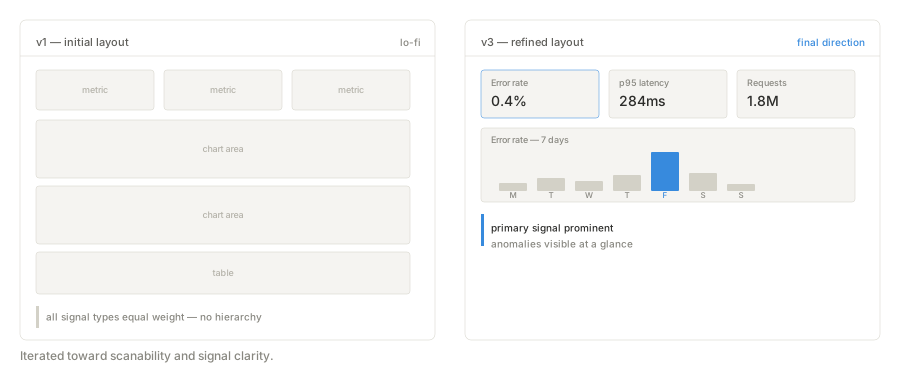
Interactive prototypes were tested with Product Managers to refine labeling clarity, filtering behavior, and navigation hierarchy. Iterations focused on reducing cognitive load while preserving confidence in the underlying data.
Result
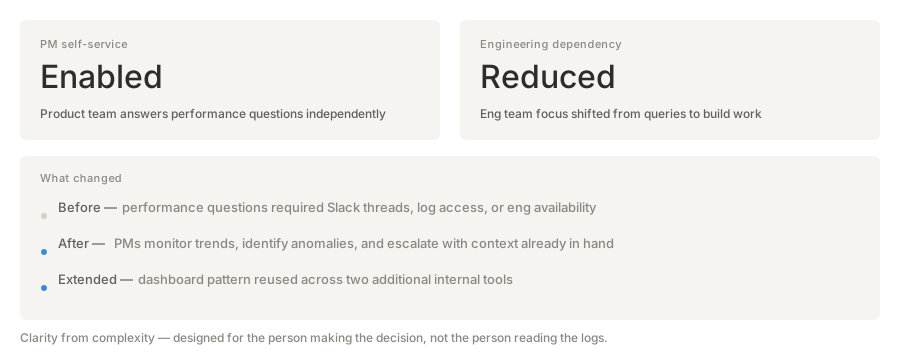
Product Managers gained direct, real-time access to performance intelligence for the first time.
Decisions that previously required engineering coordination could now be made immediately. Performance issues were identified earlier, and roadmap discussions became more evidence-driven.
Engineering teams experienced a measurable reduction in ad hoc data requests, enabling greater focus on platform development rather than manual reporting.
The dashboard established a scalable intelligence layer that aligned technical telemetry with product decision-making.