Enterprise Governance & Role-Based Access Control (RBAC)
Established a scalable role-based access framework with guardrails that clarified ownership boundaries, reduced access risk, and supported secure platform growth.
Banking API for Developer Ecosystem
Enterprise B2B
Situation
As the Open Banking platform expanded, access management workflows had not evolved alongside system complexity and security risk.
Role hierarchy lacked structural safeguards to ensure continuity of ownership. When administrators left projects or roles changed, access permissions could become misaligned or orphaned, creating operational delays and requiring manual recovery through platform support.
The system relied heavily on users remembering governance best practices rather than embedding safeguards directly into the product experience.
This created risk exposure and introduced unnecessary friction for teams managing secure API projects.
Task
As the embedded product designer working with platform engineering, security stakeholders, and product leadership, I was responsible for designing a scalable permissions model aligned with least-privilege principles.
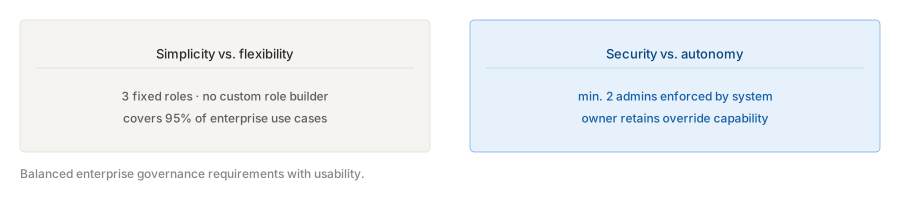
The system needed to prevent administrative lockouts, maintain continuity of ownership, and enable teams to manage access independently without increasing operational risk.
The design also needed to communicate governance logic clearly so users could confidently manage permissions without external support.
Action
I began by auditing existing permission workflows and reviewing support escalation patterns related to access management issues. Analysis revealed that the core problem was structural rather than visual: governance logic had not been encoded directly into the product experience.
I reframed the problem from interface design to security architecture expressed through interaction design.
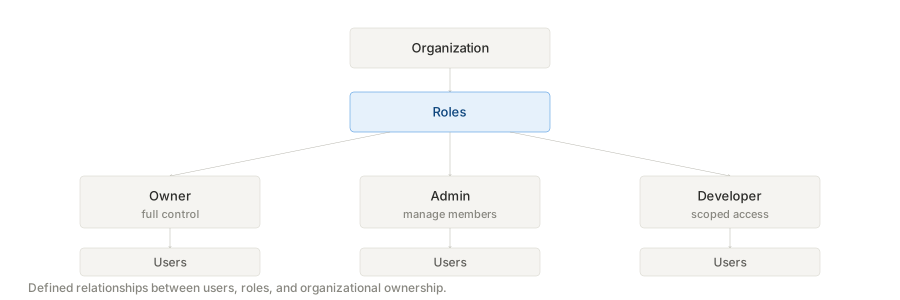
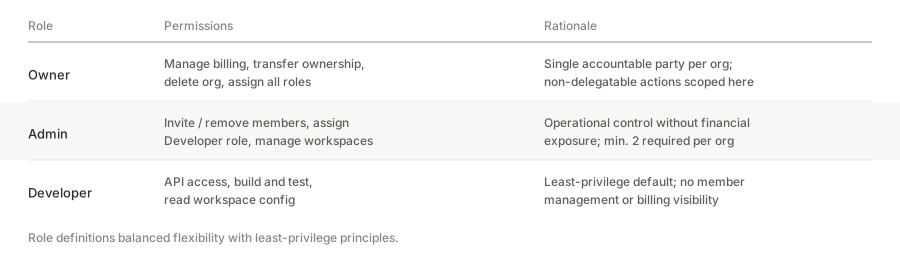
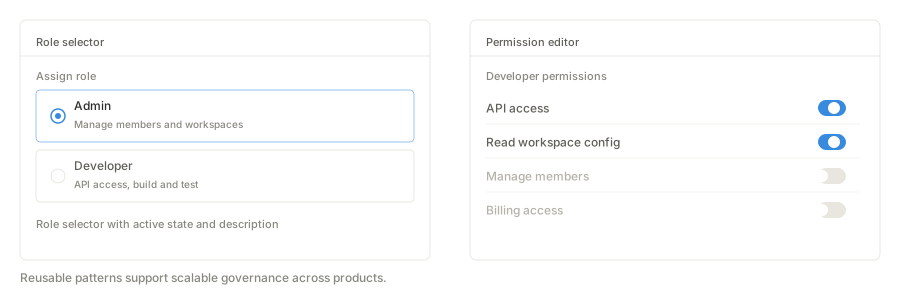
Working closely with engineering and security partners, I designed a tiered RBAC model with clearly scoped authority levels:
- Owners maintained full governance responsibility.
- Admins managed operational configuration with constrained authority.
- Developers received limited or read-only permissions aligned with implementation needs.
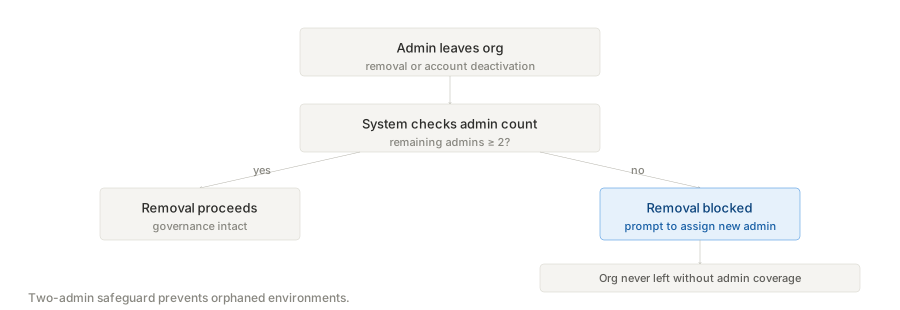
To reduce single points of failure, I introduced guardrails requiring at least two administrators per project. If a project approached an administrative risk threshold, the system surfaced proactive prompts encouraging assignment of backup administrators.
Interaction patterns were tested through task-based usability studies to ensure users could confidently assign, modify, and audit permissions without external guidance.
Design documentation included role definitions, escalation logic, and edge cases to ensure long-term governance continuity.
Result
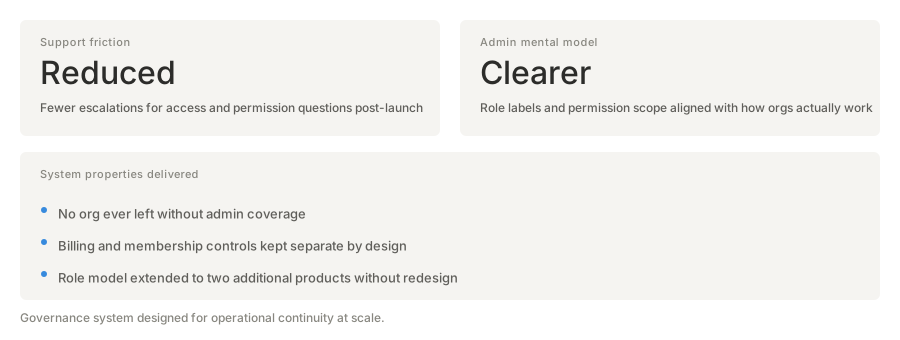
The RBAC system eliminated orphaned project scenarios by embedding administrative redundancy directly into the product logic.
Support escalations related to access continuity decreased as teams were able to manage permissions independently and safely.
The platform achieved stronger least-privilege enforcement while maintaining operational flexibility for growing teams.
Most importantly, governance became preventative rather than reactive, enabling the platform to scale securely without increasing coordination overhead.